

How Net Metering Actually Works in Solar
If you’re considering going solar, you’ve probably heard the term net metering. It’s often mentioned as one of the biggest benefits of installing a solar power system—but many people aren’t exactly sure how it works. In reality, net metering is quite simple, and understanding it can help you see why solar makes so much financial sense.
Let’s walk through how net metering actually works and how it helps you save money on your electricity bills.
What Is Net Metering?
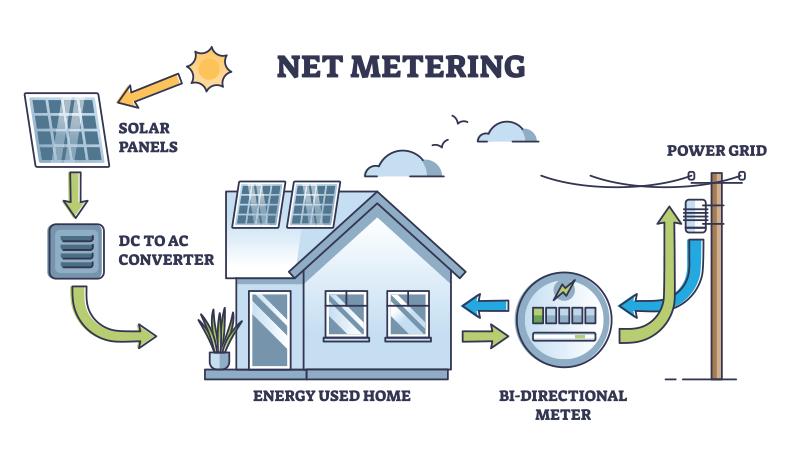
Net metering is a billing mechanism that allows solar system owners to send excess electricity back to the power grid and receive credits in return. Instead of wasting the extra power your solar panels produce, you “store” it in the grid and use it later when your system isn’t generating enough electricity.
How Solar Power Is Used in Your Home
During the day, your solar panels generate electricity from sunlight. This power is first used to run your home or business—things like lighting, fans, air conditioners, computers, and machinery. As long as your solar system is producing enough energy, you won’t need electricity from the grid.
What Happens to Extra Solar Power?
There are times when your solar panels generate more electricity than you’re using. When that happens, the excess power is automatically exported to the electricity grid. This process happens seamlessly, without any manual effort from your side.
A special bi-directional net meter records this flow of electricity, measuring both:
- Power you take from the grid
- Power you send back to the grid
How Energy Credits Work
For every unit of electricity you export to the grid, you earn energy credits. These credits are adjusted against the electricity you consume from the grid later—such as at night, early mornings, or on cloudy days.
Instead of paying for total electricity used, you only pay for the net consumption, which is the difference between units imported and units exported.
How Billing Works with Net Metering
At the end of your billing cycle:
- If you use more electricity than your solar system produces, you pay only for the remaining units
- If your solar system produces more electricity than you use, the surplus units are carried forward as credits (subject to local DISCOM rules)
Over time, this significantly reduces your electricity bills.
Does Net Metering Work During Power Cuts?
This is a common question. Grid-connected solar systems with net metering automatically shut down during power outages. This is a safety measure to protect utility workers. If you want power during outages, you’ll need a battery-backed or hybrid solar system.
Why Net Metering Makes Solar So Valuable
Net metering plays a crucial role in making solar energy affordable and practical:
- It maximizes the use of solar power
- It reduces dependency on grid electricity
- It improves the return on investment of your solar system
- It supports cleaner, greener energy
Final Thoughts
Net metering transforms your electricity meter into a two-way system that works in your favor. By allowing you to export excess solar power and earn credits, it ensures that no energy is wasted—and every ray of sunlight helps lower your electricity bill.
Ready to Transform Your Solar Business?
Create professional solar proposals in minutes with Sunkode
Get Started Free